


Suit Fabrics Explained: Wool, Linen, Cotton & Blends – A Complete Men's Guide

When buying a suit, it's easy to focus on the colour, style and fit. But there's another detail that can make just as much difference: the fabric.
The material a suit is made from affects how it feels, how it hangs, how much it creases and when it's most comfortable to wear. Some fabrics are better suited to warmer weather, while others are popular for their texture, structure and versatility.
Whether you're buying your first suit, updating your work wardrobe or choosing something for a wedding, understanding the different suit fabrics will help you make a more informed decision.
In this guide, we'll explain the differences between wool, linen, cotton and blended fabrics, look at their advantages and disadvantages, and help you decide which material is right for your needs.
Why Does Suit Fabric Matter?
A suit's fabric influences much more than its appearance. It can affect how comfortable you feel throughout the day, how well the jacket holds its shape and how much care the garment needs.
For example, a lightweight linen suit can be a practical choice for a summer event, while a textured wool or tweed suit may feel more appropriate during the colder months.
Fabric also plays a part in the overall look. Smooth materials tend to create a cleaner, more formal appearance, while textured fabrics can give a suit more character.
Before choosing a suit, it's worth considering:
-
The season: Will you be wearing it in warm or cold weather?
-
The occasion: Is it for work, a wedding or a more relaxed event?
-
Comfort: Do you need something lightweight, breathable or more substantial?
-
Maintenance: How much care are you prepared to give the garment?
-
Appearance: Do you prefer a smooth finish or something with more texture?
Understanding these points will make it easier to find a suit that works for you.
1. Wool Suits: The Classic All-Rounder
Wool is one of the most established materials used in men's suiting. It's popular because it can offer a smart appearance, a good drape and versatility across different occasions.
One of the biggest advantages of wool is that it comes in different weights and finishes. This means not all wool suits are heavy winter garments. Lighter-weight wool fabrics can be suitable for milder weather, while heavier versions are often better suited to colder conditions.
Benefits of Wool
-
Versatility: Wool suits can work for business, weddings and formal occasions.
-
Drape: Wool fabrics can hang neatly, helping create a smart silhouette.
-
Temperature regulation: Depending on the weight and construction, wool can be comfortable across different temperatures.
-
Appearance: It offers a classic finish that works well with traditional suit styles.
Are Wool Suits Good for Everyday Wear?
They can be. A well-chosen wool suit is a strong option for men who regularly wear formal clothing for work or social occasions.
The important thing is to check the fabric weight and composition rather than assuming every wool suit will feel the same.
When Should You Wear a Wool Suit?
Wool is a particularly useful choice for autumn, winter and cooler spring days. Lightweight wool can also work during warmer months, depending on the conditions and the construction of the suit.

2. Linen Suits: Ideal for Warmer Weather
Linen is closely associated with summer dressing. Its lightweight feel and relaxed appearance make it a popular choice for outdoor occasions, destination weddings and warmer climates.
Unlike a traditional smooth-finish business suit, linen often has a more relaxed character. It can look particularly good in lighter colours such as beige, stone and pale blue.
Benefits of Linen
-
Lightweight feel: Linen is a popular option for warmer conditions.
-
Breathability: Its structure allows air to move through the fabric.
-
Relaxed appearance: It creates a less formal look than many traditional suiting fabrics.
-
Summer styling: It works particularly well for daytime events and warm-weather weddings.
Does Linen Crease Easily?
Yes. Linen naturally creases, sometimes quite noticeably.
This is part of the fabric's character and is one reason it has a relaxed appearance. If you prefer a perfectly smooth finish throughout the day, linen may not be your first choice.
When Should You Wear a Linen Suit?
Linen is best known as a spring and summer option. It works particularly well for:
-
Beach weddings
-
Garden parties
-
Summer weddings
-
Outdoor celebrations
-
Destination events
For a more formal appearance, choose a well-structured design and keep the rest of your outfit simple.

3. Cotton Suits: A Smart but Relaxed Alternative
Cotton is another fabric used in men's clothing and suiting. It offers a different look and feel from traditional wool, often creating a slightly more casual appearance.
Cotton suits can be a good option for men who want something smart without the formality of a traditional business suit.
Benefits of Cotton
-
Comfort: Cotton is generally soft and comfortable to wear.
-
Versatility: It can work well for smart-casual occasions and daytime events.
-
Appearance: Cotton often has a more relaxed finish than traditional worsted wool.
-
Seasonal use: Depending on its weight and construction, it can work particularly well in spring and summer.
Do Cotton Suits Crease?
Cotton can crease during wear, particularly around the elbows, knees and areas where the fabric bends.
This is worth considering if you need a suit to maintain a very sharp appearance throughout a long working day.
When Should You Wear a Cotton Suit?
Cotton suits are often best suited to:
-
Smart-casual events
-
Daytime occasions
-
Informal weddings
-
Spring and summer gatherings
They may not be the best choice when a particularly formal or structured appearance is required.

4. Blended Suit Fabrics: Combining Different Materials
Many suits are made using a blend of two or more fibres rather than a single material.
Blended fabrics are designed to bring together different characteristics. For example, a wool and polyester blend combines wool with a synthetic fibre, creating a different balance of appearance, feel and practical performance.
The exact result depends on the fibres used and their proportions.
Wool and Polyester Blends
Wool and polyester are commonly combined in suiting. The wool contributes its traditional appearance and feel, while polyester can influence durability, crease resistance and the overall characteristics of the fabric.
The proportions matter. A suit containing a small amount of wool will feel and perform differently from one with a higher wool content.
Other Fabric Blends
You may also come across combinations involving cotton, linen, viscose and other fibres.
Each blend has its own characteristics, so it's worth checking the composition rather than judging a suit by its name or appearance alone.
Why Check the Fabric Composition?
Two suits can look very similar but have quite different fabric compositions.
Before purchasing, look at the product details to understand exactly what you're buying. This is particularly important if you have a preference for natural fibres or are looking for a suit for a specific season.

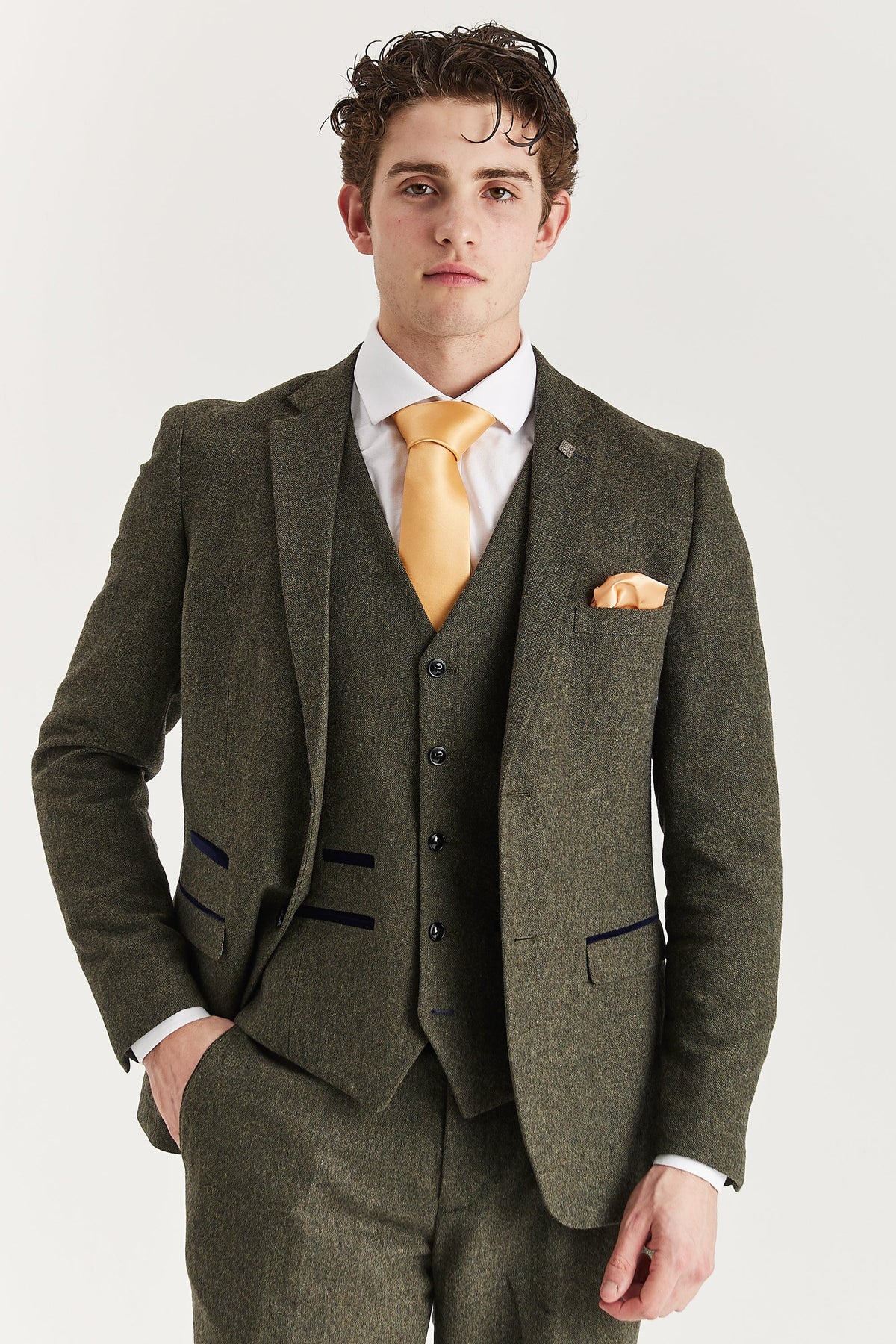
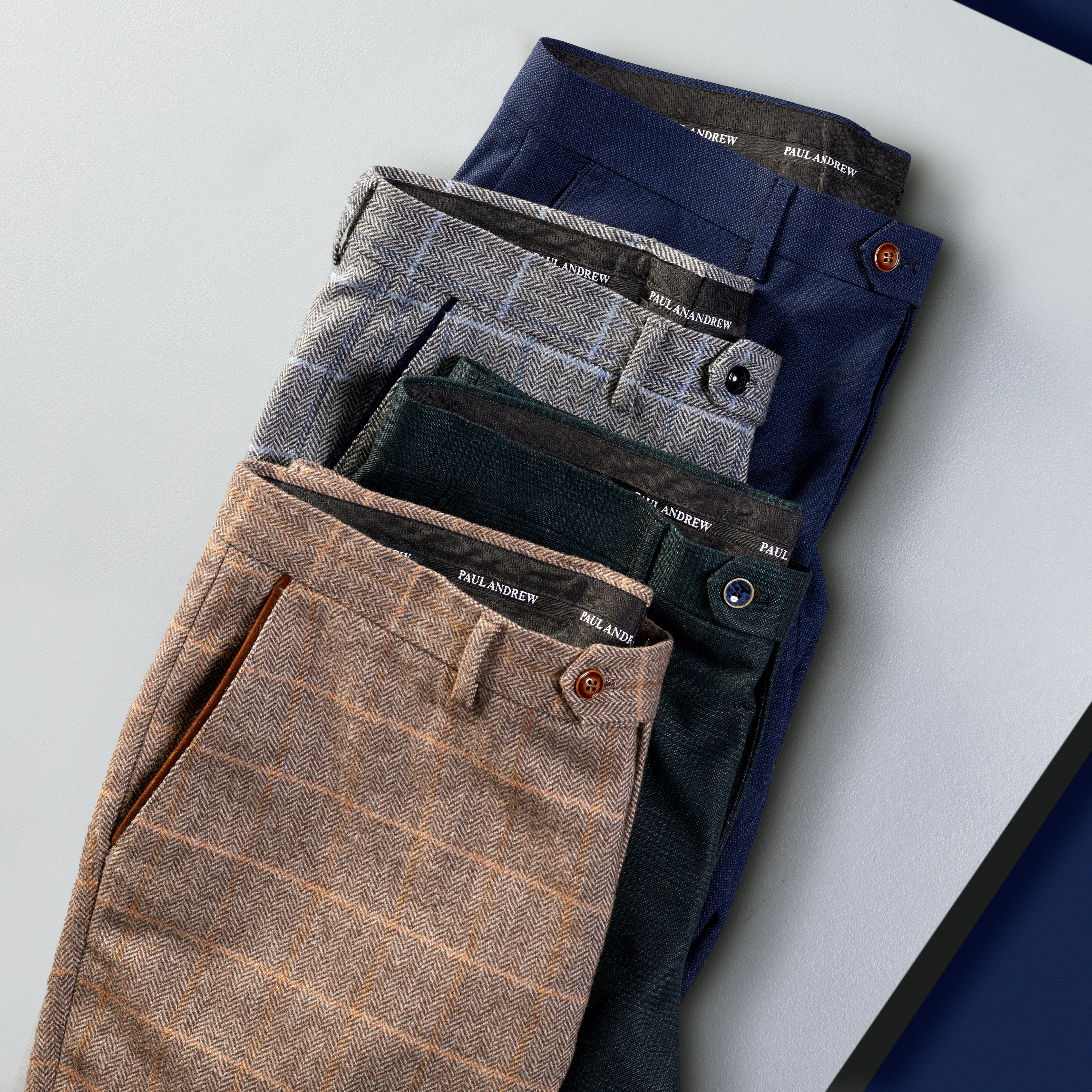
5. Tweed: A Textured Choice for Cooler Weather
Tweed deserves its own mention because it has such a distinctive place in men's suiting.
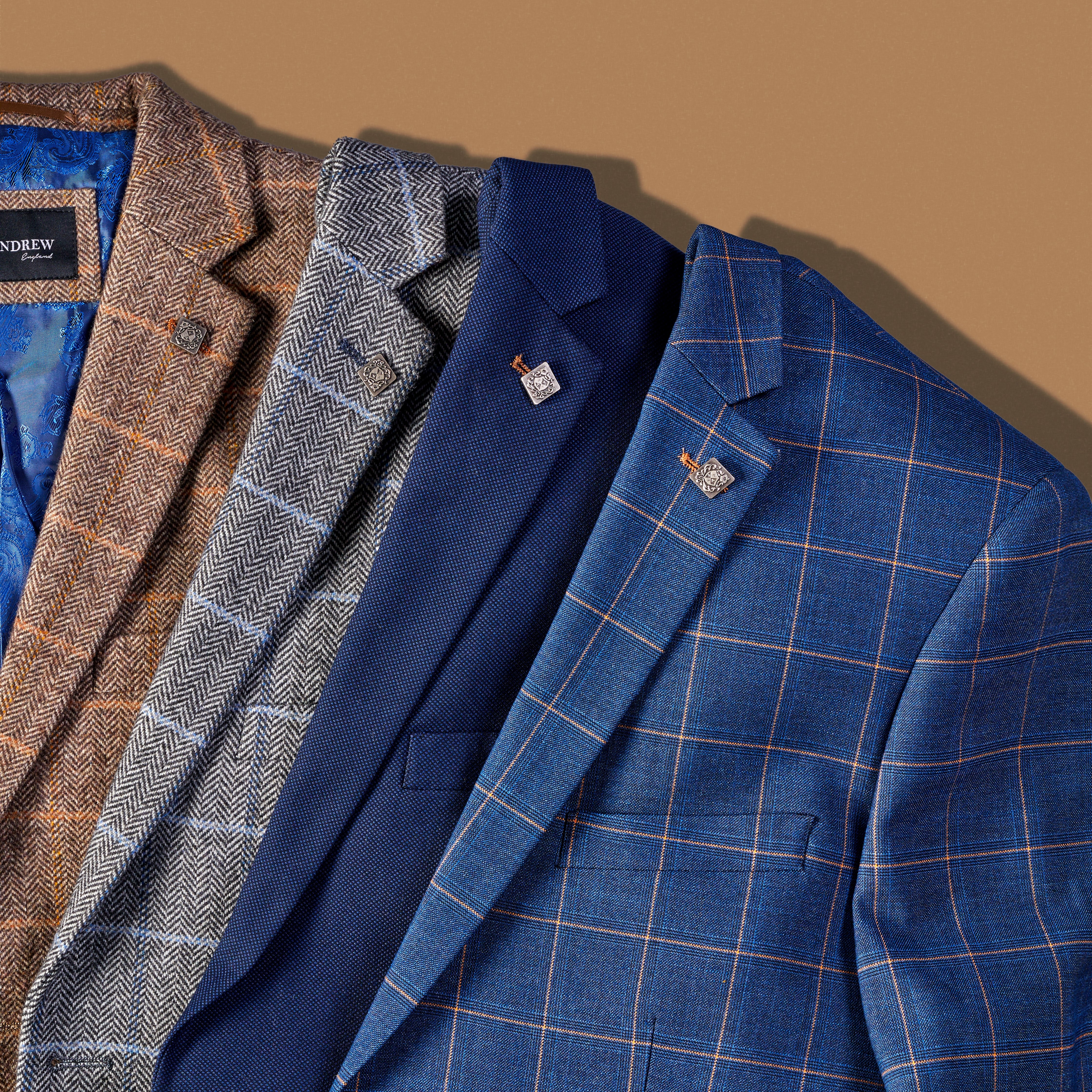
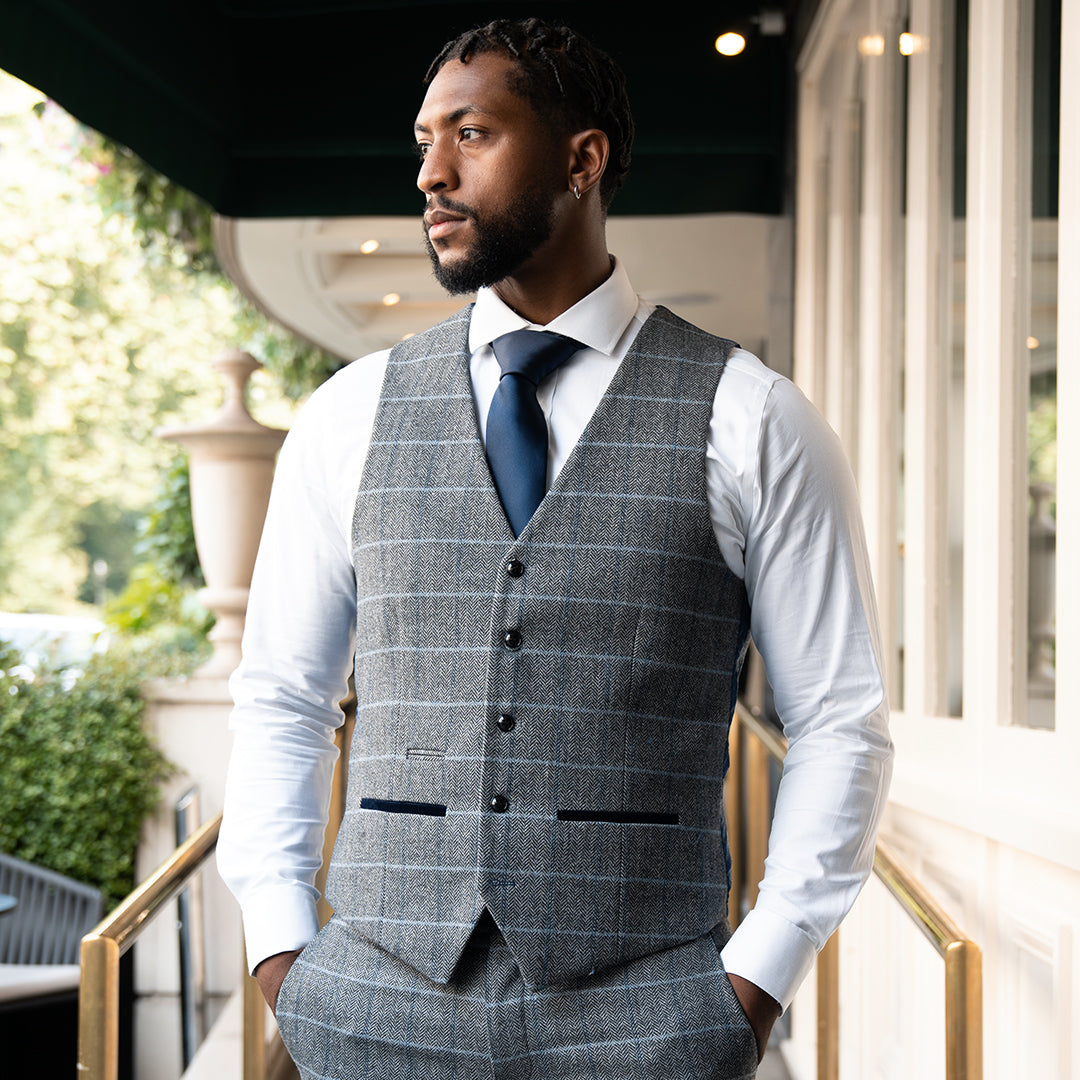
Traditionally associated with country clothing and colder weather, tweed is known for its textured appearance and classic character. It is often available in patterns such as herringbone and checks.
Tweed suits can be a particularly good choice for men who want something with more personality than a plain, smooth-finish suit.
Why Choose Tweed?
-
Texture: It adds depth and interest to an outfit.
-
Traditional style: Tweed has a timeless appearance.
-
Distinctive patterns: Herringbone and check designs offer more visual detail.
-
Cooler weather: Its traditional heavier feel makes it a popular autumn and winter option.
How to Style a Tweed Suit
Tweed already has plenty of character, so it's usually best to keep the rest of the outfit balanced.
A crisp white or pale blue shirt works well, while a simple tie can complement the fabric without making the outfit feel too busy.
Brown leather shoes are another popular choice, particularly with brown, green and navy tweed.
Paul Andrew offers a range of checked and tweed-inspired styles. You can browse the Paul Andrew men's suit collection to explore the available designs.

Which Suit Fabric Is Best for Each Season?
Choosing a fabric that suits the weather can make a noticeable difference to how comfortable you feel.
Here's a simple guide to help you decide.
| Season | Fabrics to consider | Why |
|---|---|---|
| Spring | Lightweight wool, cotton blends | Comfortable for changing temperatures |
| Summer | Linen, lightweight cotton, lightweight wool | Better suited to warmer conditions |
| Autumn | Wool, wool blends, tweed | More substantial fabrics and textures |
| Winter | Heavier wool, tweed and suitable blends | A more substantial feel for colder weather |
Remember that fabric weight and construction matter just as much as the fibre itself. A lightweight wool suit can feel very different from a heavy wool suit, for example.
How to Choose the Right Suit Fabric for the Occasion
The season is important, but so is where you're planning to wear your suit.
For Work and Business Meetings
For regular office wear, wool and wool-blend suits are often reliable choices. They offer a traditional smart appearance and can be worn with a range of shirts and ties.
Navy, charcoal and grey are particularly versatile colours.
Explore the Paul Andrew office suit collection for styles suited to professional occasions.
For Weddings
The best fabric for a wedding depends on the time of year and the formality of the event.
For a summer wedding, lighter fabrics and colours can work particularly well. For autumn and winter weddings, wool, textured finishes and tweed-inspired designs can create a more seasonal look.
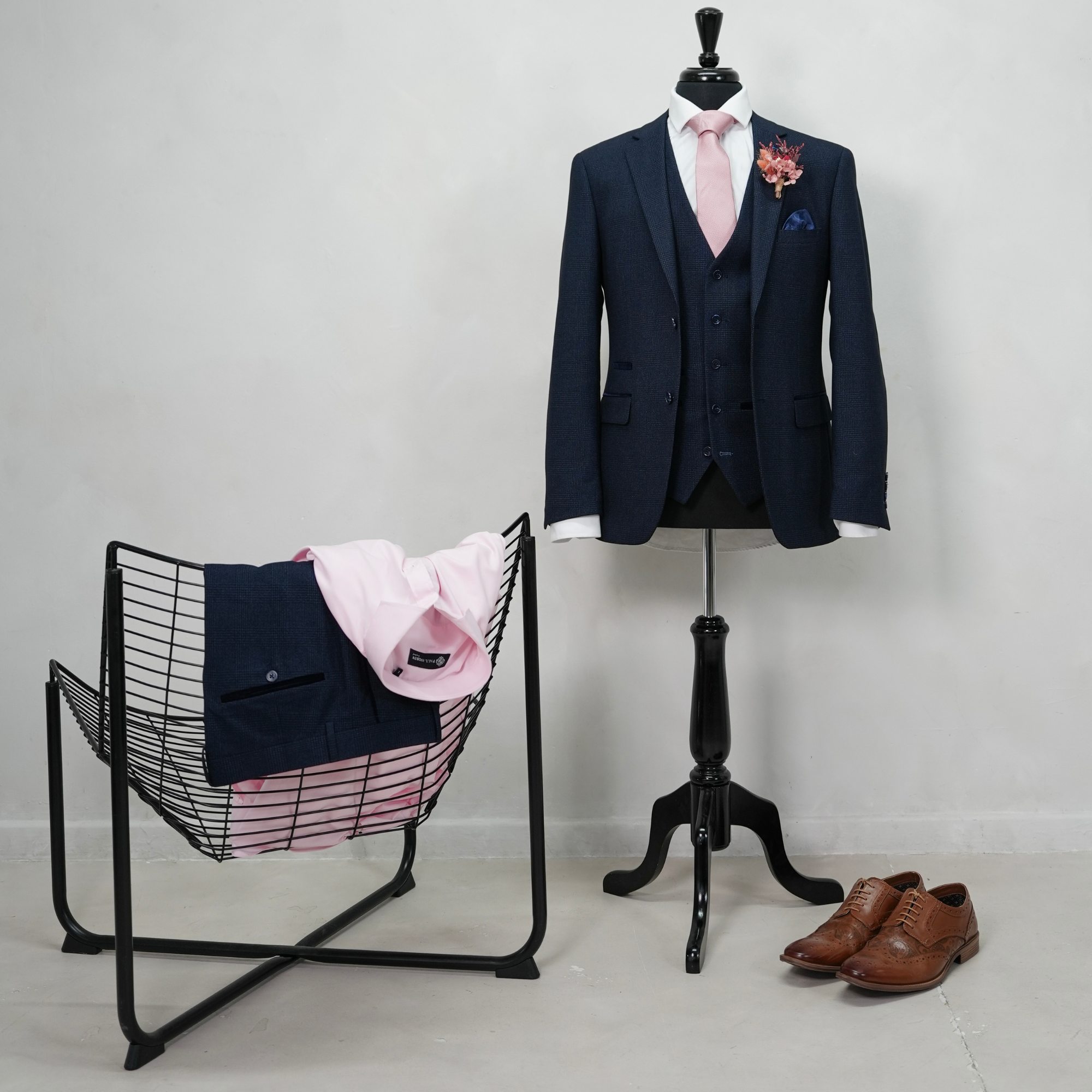
A three-piece suit is also a popular option when you want a more traditional formal appearance.
You can browse the Paul Andrew three-piece suit collection for wedding and formal styles.
For Everyday Formal Wear
If you regularly attend events or need a suit for different occasions, versatility should be a priority.
A classic wool or wool-blend suit in navy or charcoal is a sensible starting point. It can be styled differently with shirts, ties and accessories, helping you get more use from one purchase.
Understanding Fabric Composition and Care Labels
One of the easiest ways to make a better suit purchase is to read the fabric composition before ordering.
A product description should tell you which fibres have been used and, where applicable, the percentage of each material.
For example, a suit described as a wool blend may contain a combination of wool and polyester. Checking the percentages gives you a much clearer idea of the garment's composition.
You should also pay attention to the care instructions.
Different fabrics need different levels of care, and following the manufacturer's guidance helps maintain the appearance of your suit.
For example:
-
Always check the care label before cleaning.
-
Avoid assuming that a suit can be machine washed.
-
Follow the recommended cleaning instructions.
-
Store suits on suitable hangers to help maintain their shape.
-
Allow garments to air between wears where appropriate.
Paul Andrew recommends dry cleaning its suits to help maintain the quality of the fabric. Always check the individual product page for its composition and care details.

Are Natural Fabrics Always Better Than Synthetic Blends?
It's easy to assume that a suit made entirely from natural fibres is automatically the better choice. However, the best option depends on what you want from the garment.
Natural fibres such as wool and linen have their own characteristics, but blended fabrics can also offer practical benefits.
For example, some blends may be designed to improve crease resistance or make a garment easier to care for. Others may change the texture, weight or overall finish.
Rather than focusing only on whether a fabric is natural or synthetic, consider:
-
How the suit feels when worn
-
Whether the fabric is suitable for the season
-
How the garment hangs and holds its shape
-
The fabric composition
-
The care instructions
-
Whether it suits the occasion
The right choice is the one that meets your needs and gives you the appearance and comfort you're looking for.
Common Suit Fabric Mistakes to Avoid
When buying a suit, a few common mistakes are worth avoiding.
Assuming all wool suits are heavy: Wool comes in different weights and finishes. Don't rule it out for warmer weather without checking the fabric details.
Choosing linen without considering creasing: Linen naturally wrinkles. Make sure you're comfortable with its relaxed appearance before choosing it for a formal occasion.
Ignoring the fabric composition: Don't rely on a product title alone. Check the actual fibre percentages before purchasing.
Choosing a fabric based only on appearance: A suit might look perfect online, but comfort and suitability are just as important.
Forgetting about care requirements: Some suits require professional cleaning. Check the care instructions before buying so you know how to look after your investment.
Final Thoughts: Which Suit Fabric Should You Choose?
There isn't one suit fabric that is right for every man or every occasion. Wool remains a versatile classic, linen is a popular choice for warmer weather, cotton offers a more relaxed alternative, and blended fabrics combine different characteristics depending on their composition.
Tweed is another option worth considering if you like a more traditional, textured appearance, particularly during autumn and winter.
The best approach is to think about when you'll wear the suit, how formal the occasion is and what level of comfort and maintenance you expect.
Take the time to check the fabric composition and care details before making your choice. A suit that looks good and feels right is always a better investment than one chosen on appearance alone.